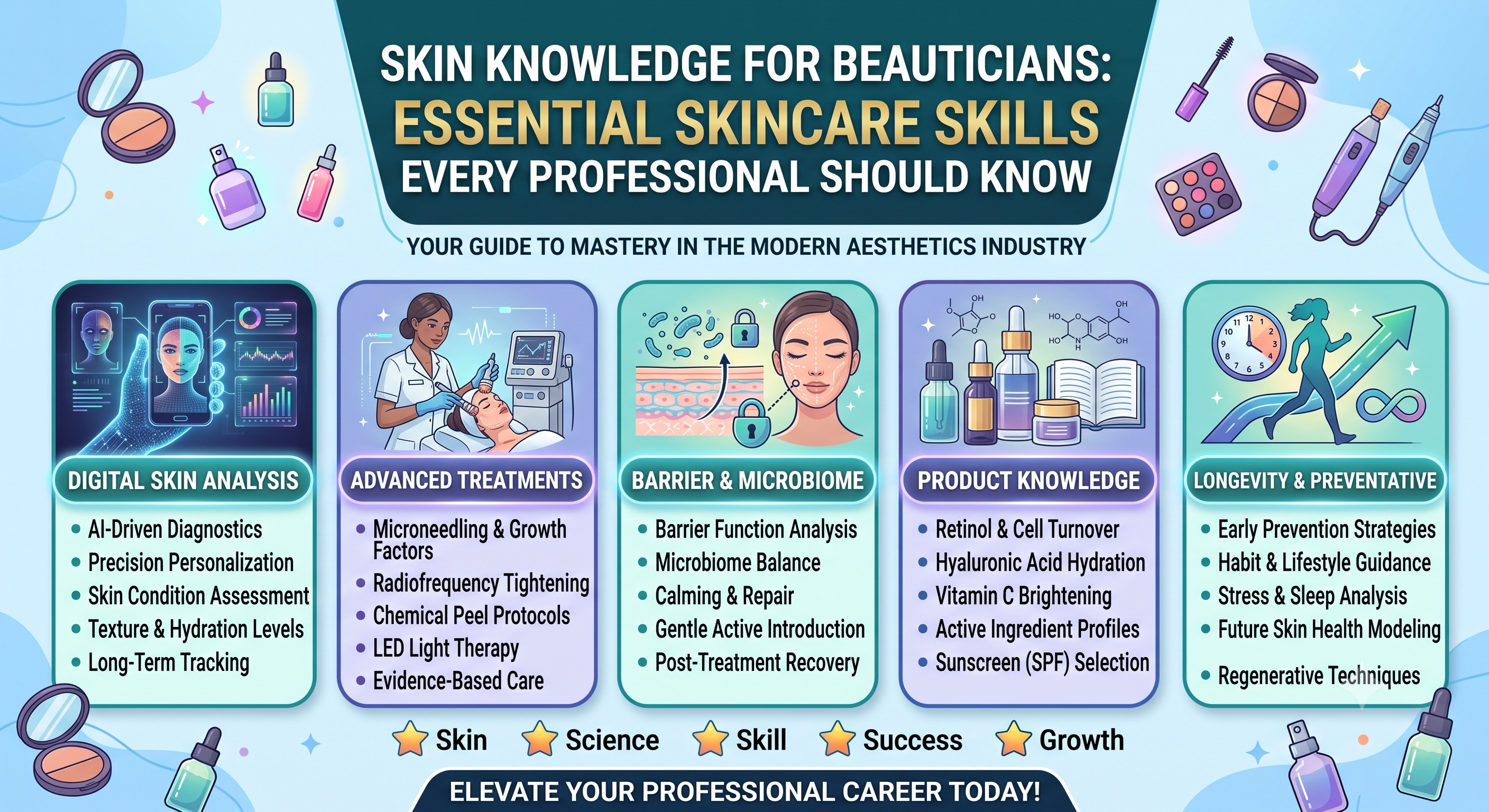
Skin Knowledge for Beauticians: Essential Skincare Skills Every Professional Should Know
Skin Knowledge for Beauticians: Essential Skincare Skills Every Professional Should Know
Professional skincare is one of the most important areas of beauty training. A beautician does far more than apply creams, perform facials, or recommend products. A skilled professional needs a strong understanding of skin types, skin conditions, cleansing, exfoliation, facial techniques, product ingredients, hygiene, client consultation, and aftercare.
As clients become more informed about skincare, they increasingly expect personalized treatments rather than one routine for everyone. For beauticians, developing strong skin knowledge is therefore essential for providing professional services, choosing appropriate products, and knowing when a client should be referred to a qualified healthcare professional.
Whether we are beginners, beauty students, salon professionals, or aspiring salon owners, understanding the fundamentals of skin can significantly improve the quality of our services.
Why Skin Knowledge Is Important for Beauticians
Every client’s skin is different. Two clients may request the same facial but have completely different skin characteristics and requirements.
One client may have dry skin, while another may have oily or combination skin. Someone may have sensitive skin or visible irritation that requires a much gentler approach.
Professional skin knowledge helps us:
- Identify basic skin types
- Understand common skin concerns
- Select suitable cosmetic products
- Customize facial procedures
- Avoid unnecessarily aggressive treatments
- Maintain proper hygiene
- Provide appropriate aftercare
- Communicate professionally with clients
- Recognize situations that require professional medical advice
A beautician should understand the scope of beauty services and avoid diagnosing or treating medical skin conditions beyond their training.
Understanding the Basic Structure of Skin
Before learning facial procedures, beauticians should understand the basic structure of the skin.
The skin is commonly described as having three primary layers:
1. Epidermis
The epidermis is the outermost layer of the skin. It acts as a protective barrier between the body and the external environment.
The outermost portion of the epidermis contains the stratum corneum, which consists largely of dead skin cells and plays an important role in maintaining the skin barrier.
2. Dermis
The dermis lies beneath the epidermis and contains structures such as blood vessels, nerves, hair follicles, and glands. Collagen and elastin within the dermis contribute to the skin’s strength and elasticity.
3. Subcutaneous Layer
The subcutaneous layer lies beneath the dermis and contains connective tissue and fat. It provides cushioning and contributes to insulation and structural support.
Understanding these layers gives beauticians a useful foundation for understanding how cosmetic products and treatments interact with the skin.
Different Skin Types Every Beautician Should Know
One of the first skills a professional beautician should develop is basic skin-type identification.
1. Normal Skin
Normal skin generally has a balanced appearance and may have relatively even oil and moisture levels.
A suitable professional routine may include:
- Gentle cleansing
- Mild exfoliation
- Hydration
- Appropriate moisturizing
- Sun-protection guidance
2. Dry Skin
Dry skin may feel tight, rough, flaky, or uncomfortable, particularly after cleansing.
Beauticians should generally focus on gentle cleansing and hydration rather than unnecessarily harsh procedures.
Moisturizing products containing suitable humectants, emollients, and occlusive ingredients may help support the skin barrier.
3. Oily Skin
Oily skin produces more sebum and may appear shiny, particularly around the forehead, nose, and chin.
Professional skincare may focus on:
- Gentle cleansing
- Appropriate exfoliation
- Lightweight hydration
- Non-comedogenic product selection where suitable
- Avoiding excessive stripping of the skin
Importantly, oily skin still needs hydration.
4. Combination Skin
Combination skin may have oilier areas alongside normal or drier areas.
Beauticians should avoid automatically treating the entire face as either completely oily or completely dry. Treatments may need to be adjusted according to different areas of the face.
5. Sensitive Skin
Sensitive skin may react more easily to certain products, fragrances, environmental factors, or aggressive procedures.
A professional should prioritize gentle products, careful consultation, appropriate patch testing where required, and conservative treatment choices.
Skin Concerns Beauticians Commonly Encounter
Beauticians may encounter many different cosmetic skin concerns.
Common examples include:
- Dehydrated-looking skin
- Dryness
- Excess oil
- Uneven skin tone
- Dull-looking skin
- Rough texture
- Visible pores
- Blackheads
- Whiteheads
- Mild blemish concerns
- Appearance of fine lines
- Sun-exposed pigmentation concerns
However, beauticians should understand the difference between a cosmetic concern and a medical skin condition.
Persistent, severe, painful, infected, rapidly changing, or unexplained skin problems should be evaluated by a qualified dermatologist or other appropriate healthcare professional.
How to Perform a Basic Professional Skin Analysis
Skin analysis should be performed before recommending a facial or skincare service.
A basic consultation can include:
Step 1: Ask About the Client’s Routine
Find out what products the client currently uses and how frequently they use them.
Step 2: Ask About Previous Treatments
Clients should mention recent facials, peels, waxing, cosmetic procedures, or other treatments that could affect service selection.
Step 3: Observe the Skin
Look at overall appearance, oiliness, dryness, texture, visible redness, and areas of concern.
Step 4: Identify the Basic Skin Type
Determine whether the skin appears normal, dry, oily, combination, or potentially sensitive.
Step 5: Check for Contraindications
Before treatment, assess whether there are reasons to postpone or modify a service.
Step 6: Create a Suitable Treatment Plan
Choose products and procedures based on the client’s skin characteristics and the scope of the service.
Essential Skincare Skills for Beauticians
1. Professional Cleansing
Cleansing is the foundation of most facial procedures.
Beauticians should understand how to:
- Remove makeup
- Cleanse the skin gently
- Avoid excessive rubbing
- Select products appropriate for the client
- Remove cleanser thoroughly
- Prepare the skin for subsequent steps
The objective is to clean the skin without unnecessarily compromising its protective barrier.
2. Exfoliation
Exfoliation helps remove dead surface skin cells and can improve the appearance and feel of skin.
Beauticians may encounter:
- Physical exfoliation
- Enzyme-based exfoliation
- Cosmetic exfoliating ingredients
The method should be selected according to the client’s skin condition and the professional’s training.
Over-exfoliation can cause irritation and compromise the skin barrier, so more aggressive does not necessarily mean more effective.
3. Steam
Steam has traditionally been included in some facial procedures. However, it should not automatically be used for every client.
Beauticians should consider skin sensitivity and the client’s individual circumstances before using steam. Excessive heat can be uncomfortable or irritating for some people.
4. Facial Massage
Facial massage is an important professional beauty skill.
Proper massage techniques can contribute to a relaxing salon experience and help distribute suitable cosmetic products across the skin.
Beauticians should learn:
- Correct hand positioning
- Appropriate pressure
- Facial massage movements
- Product quantity
- Areas requiring greater care
- Situations where massage should be avoided or modified
5. Face Mask Application
Different masks may be designed for different cosmetic goals.
Examples include products intended to provide:
- Hydration
- Oil control
- Soothing
- Conditioning
- Brightening appearance
The mask should be selected according to the client’s skin characteristics rather than simply using the same product for everyone.
Understanding Skincare Ingredients
Product knowledge is a major part of professional skincare training.
Beauticians should become familiar with common cosmetic ingredients and their intended purposes.
Hyaluronic Acid
Often used in hydrating skincare products, hyaluronic acid is a humectant that helps attract and retain water.
Glycerin
Glycerin is another commonly used humectant found in many moisturizing products.
Vitamin C
Vitamin C derivatives are widely used in cosmetic products designed to improve the appearance of dull or uneven-looking skin and provide antioxidant benefits.
Niacinamide
Niacinamide is commonly included in cosmetic formulations designed for concerns such as uneven appearance, oiliness, and barrier support.
Ceramides
Ceramides are lipids naturally found in the skin barrier and are widely used in moisturizing formulations designed to support barrier function.
AHAs and BHAs
Alpha hydroxy acids and beta hydroxy acids are exfoliating ingredients used in various cosmetic formulations. Their strength and suitability depend on the specific product and client’s skin.
Beauticians should always follow manufacturer instructions and their professional training when using active skincare products.
Importance of Patch Testing
Patch testing can be an important safety step for certain beauty services and products.
Before using a new product or performing a treatment with a known risk of sensitivity, professionals should follow the manufacturer’s instructions and salon protocols.
A patch test does not guarantee that a client will never experience a reaction, but it can be an important precaution for appropriate services.
Skincare Hygiene Every Beautician Must Follow
Professional skincare requires excellent hygiene standards.
Beauticians should:
- Wash or sanitize hands appropriately
- Keep work surfaces clean
- Sanitize reusable tools correctly
- Use clean towels and linens
- Avoid contaminating product containers
- Use disposable applicators where appropriate
- Store products correctly
- Follow manufacturer hygiene instructions
- Keep treatment areas clean between clients
Clean tools and clean working practices are essential components of professional skincare.
Understanding Sunscreen and Sun Protection
Sun protection should be an important part of professional skincare education.
Beauticians can educate clients about the importance of broad-spectrum sunscreen, protective clothing, shade, and appropriate sun-protection habits.
Sunscreen recommendations should remain within the beautician’s professional scope, particularly when clients have medical skin conditions or are undergoing dermatological treatments.
When Should a Beautician Refer a Client to a Dermatologist?
Knowing when not to perform a treatment is an important professional skill.
A client should be encouraged to seek medical advice when there are concerns such as:
- Persistent or severe inflammation
- Painful or infected-looking lesions
- Rapidly changing moles or spots
- Severe acne
- Unexplained rashes
- Significant swelling
- Suspected infection
- Persistent irritation
- Skin changes that do not improve
Beauticians should never claim to diagnose medical skin diseases unless they possess the appropriate professional qualifications and legal authority to do so.
Client Consultation: Questions Every Beautician Should Ask
A professional skincare consultation may include questions such as:
- What is your current skincare routine?
- What products are you currently using?
- Have you recently had a facial or cosmetic treatment?
- Do you have any known sensitivities or allergies?
- Have you experienced irritation from skincare products?
- What is your primary skincare concern?
- What result are you hoping to achieve?
- Are you currently under professional dermatological care?
Accurate consultation helps us customize services while maintaining professional boundaries.
Common Skincare Mistakes Beauticians Should Avoid
Even experienced professionals can make mistakes if they rely on a one-size-fits-all approach.
Common mistakes include:
- Using the same facial for every skin type
- Over-exfoliating
- Applying excessive pressure
- Ignoring client sensitivities
- Skipping consultation
- Poor tool hygiene
- Using expired products
- Overusing steam
- Making unsupported medical claims
- Recommending too many active ingredients at once
- Ignoring aftercare
A professional approach should always prioritize skin condition, client comfort, hygiene, and appropriate treatment selection.
How to Improve Skin Knowledge as a Beautician
Skin knowledge develops through a combination of education and experience.
We can improve our professional knowledge by:
- Completing a recognized skincare or beautician course
- Studying basic skin anatomy
- Learning cosmetic ingredients
- Practising professional facial procedures
- Attending workshops
- Learning from experienced trainers
- Keeping treatment records
- Following product instructions
- Continuing professional education
- Staying updated with modern skincare techniques
Practical experience should always complement theoretical knowledge.
Career Opportunities for Beauticians with Strong Skincare Skills
Beauticians with strong skincare expertise can explore several career paths, including:
- Professional beautician
- Facial specialist
- Skincare consultant
- Salon therapist
- Spa professional
- Beauty trainer
- Freelance beautician
- Salon owner
- Beauty entrepreneur
- Beauty product consultant
Adding complementary skills such as makeup, hair styling, nail care, and salon management can further expand career opportunities.
Frequently Asked Questions About Skin Knowledge for Beauticians
What skin knowledge should every beautician have?
Every beautician should understand basic skin anatomy, skin types, common cosmetic concerns, cleansing, exfoliation, facial techniques, skincare ingredients, hygiene, consultation, contraindications, and aftercare.
Can beauticians diagnose skin diseases?
Beauticians generally should not diagnose medical skin diseases. Their role is to provide services within their training and professional scope. Suspected medical conditions should be referred to an appropriate healthcare professional.
What are the five basic skin types?
The commonly recognized basic skin types are normal, dry, oily, combination, and sensitive. Skin can also change over time due to environmental conditions, age, lifestyle, products, and other factors.
Why is skin analysis important before a facial?
Skin analysis helps a beautician understand the client’s basic skin characteristics and select an appropriate cosmetic treatment instead of applying the same procedure to every client.
Is product knowledge important for beauticians?
Yes. Understanding cosmetic ingredients, product purposes, application instructions, and precautions helps beauticians provide more informed and professional services.
Should every client receive the same facial?
No. Facial procedures should be customized according to the client’s skin characteristics, concerns, sensitivities, treatment history, and the professional’s training.
Conclusion
Strong skin knowledge for beauticians is the foundation of professional skincare services. A successful beautician needs to understand skin types, basic anatomy, cleansing, exfoliation, facial massage, masks, cosmetic ingredients, hygiene, consultation, and treatment precautions.
The goal is not simply to perform more treatments. It is to provide appropriate, hygienic, personalized, and professional beauty services while recognizing when a concern falls outside the scope of salon treatment.
By combining formal skincare education with hands-on practice, product knowledge, excellent hygiene, and continuous learning, beauticians can improve their confidence, deliver better client experiences, and build stronger careers in the beauty and wellness industry.