How to Become a Professional Beautician After 12th: Skills, Courses & Career Guide
How to Become a Professional Beautician After 12th: Skills, Courses & Career Guide
Completing Class 12 is an important milestone, but it is not the only path to a successful career. For students who are creative, interested in beauty and fashion, and enjoy working with people, becoming a professional beautician after 12th can be an exciting and practical career choice.
The beauty and wellness industry offers opportunities across salons, beauty clinics, spas, makeup studios, bridal services, freelancing, beauty brands, academies, and entrepreneurship. With professional training and hands-on practice, students can develop specialized skills and build a career without necessarily pursuing a traditional three- or four-year degree.
This guide explains how to become a professional beautician after 12th, which courses to choose, essential skills to learn, career opportunities, earning potential, and how to start a successful beauty career.
Can We Become a Beautician After 12th?
Yes. Students can start professional beautician training after completing Class 12. In many cases, beauty courses are skill-based and focus heavily on practical training rather than traditional academic qualifications.
A beginner can start with a basic beautician course, followed by advanced training in areas such as makeup, hairstyling, skincare, hair colouring, nail art, bridal makeup, or salon management.
The important thing is to choose training that provides a combination of:
- Theoretical knowledge
- Practical demonstrations
- Hands-on practice
- Professional product knowledge
- Hygiene and safety training
- Client consultation skills
- Industry-oriented techniques
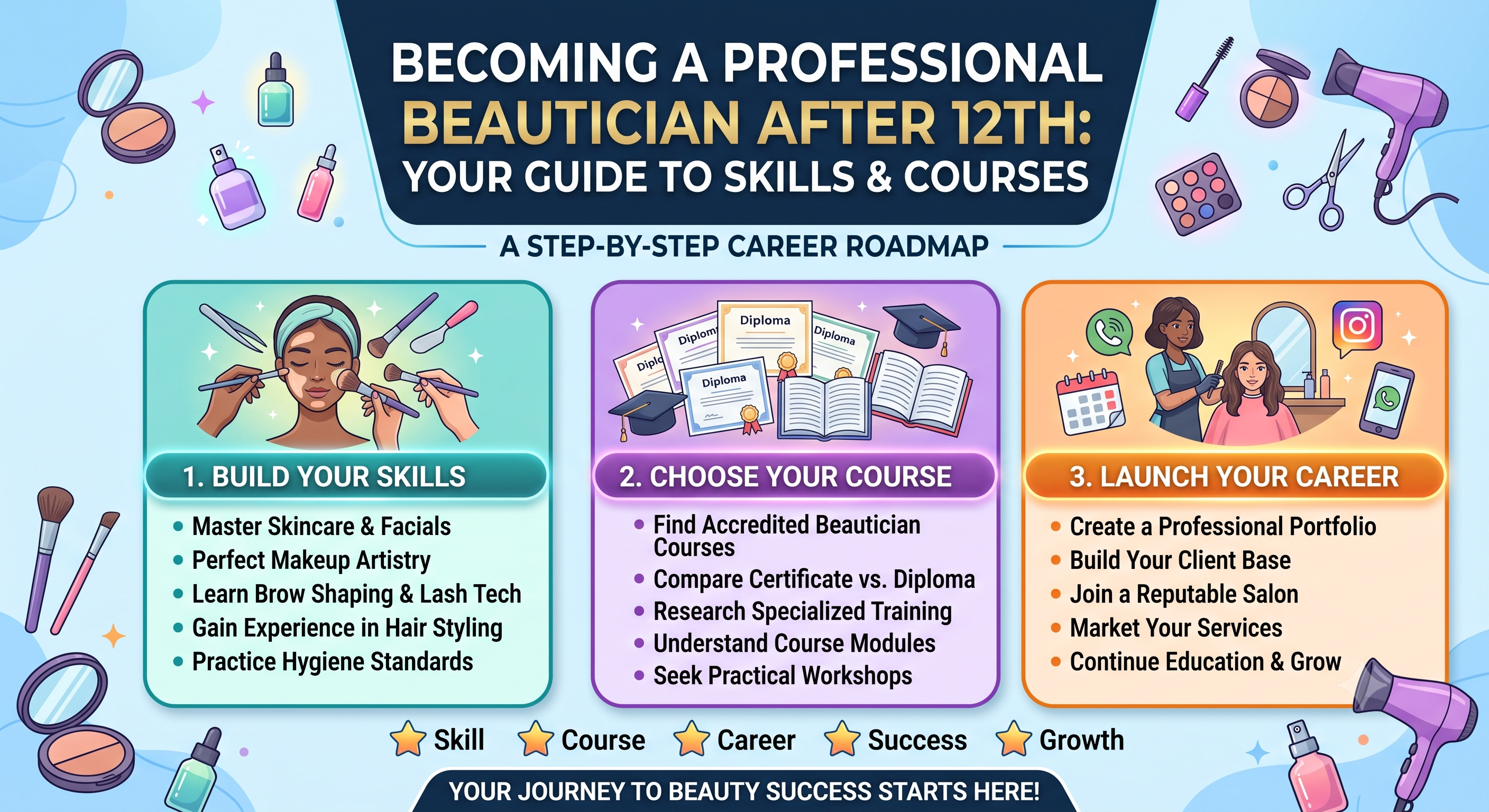
Step-by-Step Guide to Becoming a Professional Beautician After 12th
Step 1: Complete Class 12
The first step is completing your 12th standard. Students from different academic streams can explore beauty and wellness as a career option.
Beauty training generally does not require a specific academic stream. Whether we have studied science, commerce, arts, or another stream, we can develop professional beauty skills through specialized training.
Step 2: Choose the Right Beautician Course
After 12th, we should select a course according to our career goals.
Some popular options include:
- Basic Beautician Course
- Professional Beautician Course
- Hair Styling Course
- Makeup Artist Course
- Bridal Makeup Course
- Hair Colouring Course
- Skin Care Course
- Nail Art Course
- Hair Cutting Course
- Advanced Hair Treatment Course
- Salon Management Course
Students who want broader career opportunities can begin with a comprehensive hair, skin, and beauty course and later specialize.
Step 3: Develop Essential Beauty Skills
A professional beautician needs more than one technique. Modern clients expect personalized services, so we should develop skills across several beauty categories.
Important skills include:
Skincare: Cleansing, cleanup, facial techniques, skin analysis, exfoliation, and basic skin treatments.
Hair: Hair cutting, blow-drying, styling, hair spa, hair colouring, and advanced treatments.
Makeup: Basic makeup, party makeup, engagement makeup, HD makeup, and bridal makeup.
Nails: Manicure, pedicure, nail shaping, nail art, and basic extensions.
Grooming: Eyebrow shaping, threading, waxing, and other grooming services.
Client service: Consultation, communication, service recommendations, and aftercare guidance.
Step 4: Get Hands-On Practical Training
Practical training is one of the most important parts of becoming a professional beautician.
Beauty services require precision and coordination. We need to learn how to hold and use tools correctly, section hair, apply products evenly, perform massage techniques, create makeup looks, maintain hygiene, and work confidently with real clients.
A good training program should provide sufficient opportunities for hands-on practice under professional supervision.
Students should avoid choosing a course based only on a certificate. The quality of practical training can have a much greater impact on professional ability.
Step 5: Learn Salon Hygiene and Safety
Professional beauty services require strict attention to hygiene.
During training, we should learn how to:
- Maintain clean workstations
- Sanitize reusable tools
- Use disposable products appropriately
- Handle towels hygienically
- Store products correctly
- Maintain clean treatment areas
- Follow product instructions
- Identify basic service precautions
- Protect both client and professional during treatments
Professional hygiene is an essential part of client trust and salon reputation.
Step 6: Improve Client Consultation Skills
A professional beautician should understand the client’s requirements before beginning a service.
For example, before performing a hair treatment, we may need to understand the client’s previous chemical treatments, current hair condition, desired result, and maintenance expectations.
Similarly, makeup professionals should consider skin type, outfit, event, lighting, personal preferences, and the desired finish.
Strong consultation skills help us provide more personalized services and create better customer experiences.
Best Beautician Courses After 12th
There are several courses students can consider depending on their interests.
1. Basic Beautician Course
A basic beautician course is suitable for beginners who want to understand fundamental salon services.
Typical training may include:
- Basic skincare
- Facial and cleanup
- Threading
- Waxing
- Manicure
- Pedicure
- Basic hair care
- Basic makeup
- Salon hygiene
It can provide a foundation before progressing to advanced training.
2. Professional Beautician Course
A professional beautician course generally provides broader training across hair, skin, makeup, and grooming.
This option can be suitable for students who want to work in a professional salon after completing their training.
3. Professional Makeup Course
Students with a strong interest in makeup can specialize in professional makeup.
Training may cover:
- Base preparation
- Foundation matching
- Concealing
- Contouring
- Highlighting
- Eye makeup
- Eyeliner
- Lashes
- Hairstyling
- Party makeup
- Event makeup
Advanced programs may include HD and airbrush makeup.
4. Bridal Makeup Course
Bridal makeup is a popular specialization because weddings create demand for specialized makeup artists.
A bridal makeup course may include:
- Bridal skin preparation
- HD bridal makeup
- Long-lasting makeup techniques
- Eye makeup
- Hairstyling
- Hair accessories
- Dupatta or saree draping
- Engagement looks
- Reception looks
- Customized bridal looks
5. Hair Styling and Hairdressing Course
Students interested in hair can pursue professional hair training.
Important skills include:
- Hair cutting
- Hair styling
- Blow-drying
- Straightening
- Curling
- Braiding
- Updos
- Hair spa
- Hair colouring
- Hair treatments
Advanced training can include techniques such as keratin, smoothening, nanoplastia, and other professional hair treatments, with appropriate safety and product training.
6. Skincare and Facial Course
Students interested in skincare can specialize in facial and beauty treatments.
Training can include:
- Skin analysis
- Cleansing
- Exfoliation
- Steam
- Extraction
- Face massage
- Facial procedures
- Cleanup
- Masks
- Basic skin consultation
- Aftercare
7. Nail Art and Nail Extension Course
Nail services are another growing specialization. Students can learn:
- Manicure
- Pedicure
- Nail shaping
- Nail polish application
- French nails
- Nail art
- Gel techniques
- Nail extensions
- Basic nail maintenance
Essential Skills for a Professional Beautician
A successful beautician needs both technical and interpersonal skills.
Technical Skills
We should develop:
- Hair cutting
- Hair styling
- Hair colouring
- Makeup application
- Skincare
- Facial techniques
- Nail care
- Threading
- Waxing
- Product application
- Salon hygiene
Soft Skills
Professional success also depends on:
- Communication
- Patience
- Creativity
- Time management
- Listening
- Attention to detail
- Customer service
- Professional presentation
- Problem-solving
A technically skilled professional who cannot communicate effectively with clients may struggle to build long-term relationships.
Career Options After a Beautician Course
After completing professional training, several career paths become available.
Work in a Professional Salon
The most common starting point is joining an established salon. This allows beginners to gain experience while working with experienced professionals.
Become a Makeup Artist
Students specializing in makeup can work as party, engagement, fashion, or bridal makeup artists.
Become a Hair Stylist
Hair specialists can work in salons, studios, fashion environments, events, or as freelancers.
Start Freelancing
Freelancing provides flexibility and allows professionals to serve clients from home, travel to events, or provide appointment-based services.
Start a Home Salon
With appropriate skills, equipment, hygiene practices, and local business requirements, a trained beautician can establish a home-based beauty service.
Open a Beauty Salon
Experienced professionals can eventually move into entrepreneurship by starting their own salon.
Business training in salon management, pricing, inventory, staff management, marketing, and customer retention can be extremely useful for aspiring salon owners.
Become a Beauty Trainer
Experienced professionals can also move into education and training. With strong technical expertise and teaching ability, they may train aspiring beauticians or work with beauty academies.
How Long Does It Take to Become a Beautician After 12th?
The duration depends on the type of course and specialization.
Short-term courses can introduce basic beauty skills, while comprehensive professional programs may require several months of structured learning and practical training.
Advanced specializations such as bridal makeup, professional hair colouring, nail extensions, or advanced hair treatments can be learned separately after establishing the fundamentals.
Rather than choosing a course solely based on duration, we should consider curriculum, practical training, trainer experience, equipment, student practice opportunities, and career support.
What Should We Check Before Joining a Beautician Course?
Before enrolling, students should compare different academies carefully.
Look for:
- Experienced trainers
- Practical classes
- Modern techniques
- Comprehensive curriculum
- Proper hygiene standards
- Professional equipment
- Student practice opportunities
- Course certification
- Advanced specialization options
- Placement or career guidance
- Portfolio-building opportunities
It is also useful to visit the academy and understand how practical classes are conducted before making a final decision.
Beautician Career: Salary and Earning Potential
Beautician earnings can vary significantly depending on location, experience, specialization, salon, client base, and service quality.
Beginners may start with an entry-level salary while gaining experience. With specialization in high-demand services such as bridal makeup, hair colouring, advanced hair treatments, or nail services, professionals can increase their earning potential.
Freelancers and salon owners may have different income structures because their earnings depend on the number of clients, pricing, operating costs, and business performance.
Is Beautician a Good Career After 12th?
Yes, becoming a beautician can be a practical career option for students who enjoy beauty, creativity, fashion, grooming, and working with people.
The profession offers multiple paths instead of a single fixed career route. We can begin as a junior beautician, develop specialization, become a senior professional, work independently, become a trainer, or eventually establish a salon business.
The key is continuous learning because beauty trends, products, techniques, and client expectations continue to change.
Frequently Asked Questions
Can I become a professional beautician after 12th?
Yes. Students can enroll in professional beauty and beautician courses after completing Class 12. A combination of structured education and practical training can help build the skills required for salon work.
Which course is best for becoming a beautician after 12th?
For beginners, a comprehensive professional beautician or hair-and-beauty course can provide a strong foundation. Students can then specialize in makeup, bridal makeup, hair, skincare, nails, or other areas according to their interests.
Is a degree required to become a beautician?
A traditional degree is not necessarily required for many salon-based beauty careers. Professional skill training, practical experience, specialization, and industry knowledge are particularly important.
Can I become a makeup artist after 12th?
Yes. Students can join a professional makeup course after 12th and progress from basic makeup to party, engagement, HD, airbrush, and bridal makeup.
Can I open my own salon after a beautician course?
Professional training can provide the technical foundation needed for salon services. However, aspiring salon owners should also learn about business planning, budgeting, staff management, inventory, marketing, customer service, and applicable local requirements.
What skills should a beginner learn first?
Beginners should start with hygiene, basic skincare, grooming, hair fundamentals, basic makeup, client consultation, and product knowledge before progressing toward advanced treatments and specialized services.
Conclusion
Becoming a professional beautician after 12th can open the door to a flexible and creative career in the beauty and wellness industry. From professional salons and makeup studios to freelancing, bridal services, home salons, and entrepreneurship, there are multiple career opportunities available.
The best approach is to begin with strong fundamentals, choose a practical and comprehensive course, practise consistently, and gradually develop advanced specializations.
By combining technical beauty skills, creativity, hygiene, communication, customer service, and business knowledge, we can build a professional career that continues to grow with changing beauty trends and client demands.