How to Become a Professional Makeup Artist in India: Courses, Skills & Career Guide
How to Become a Professional Makeup Artist in India: Courses, Skills & Career Guide
The beauty and fashion industry in India has expanded significantly, creating exciting opportunities for people who want to build a career in professional makeup artistry. From bridal and party makeup to fashion shoots, television, film, events, and social media content, professional makeup artists can work across a wide range of industries.
For aspiring artists, becoming a makeup artist is not simply about knowing how to apply foundation or eyeshadow. A successful professional needs technical makeup skills, knowledge of skin preparation, colour theory, product selection, hygiene, hairstyling, communication, creativity, and practical experience.
Whether we have completed Class 12, graduated from college, are changing careers, or simply have a passion for beauty, professional makeup training can provide a structured pathway into the industry.
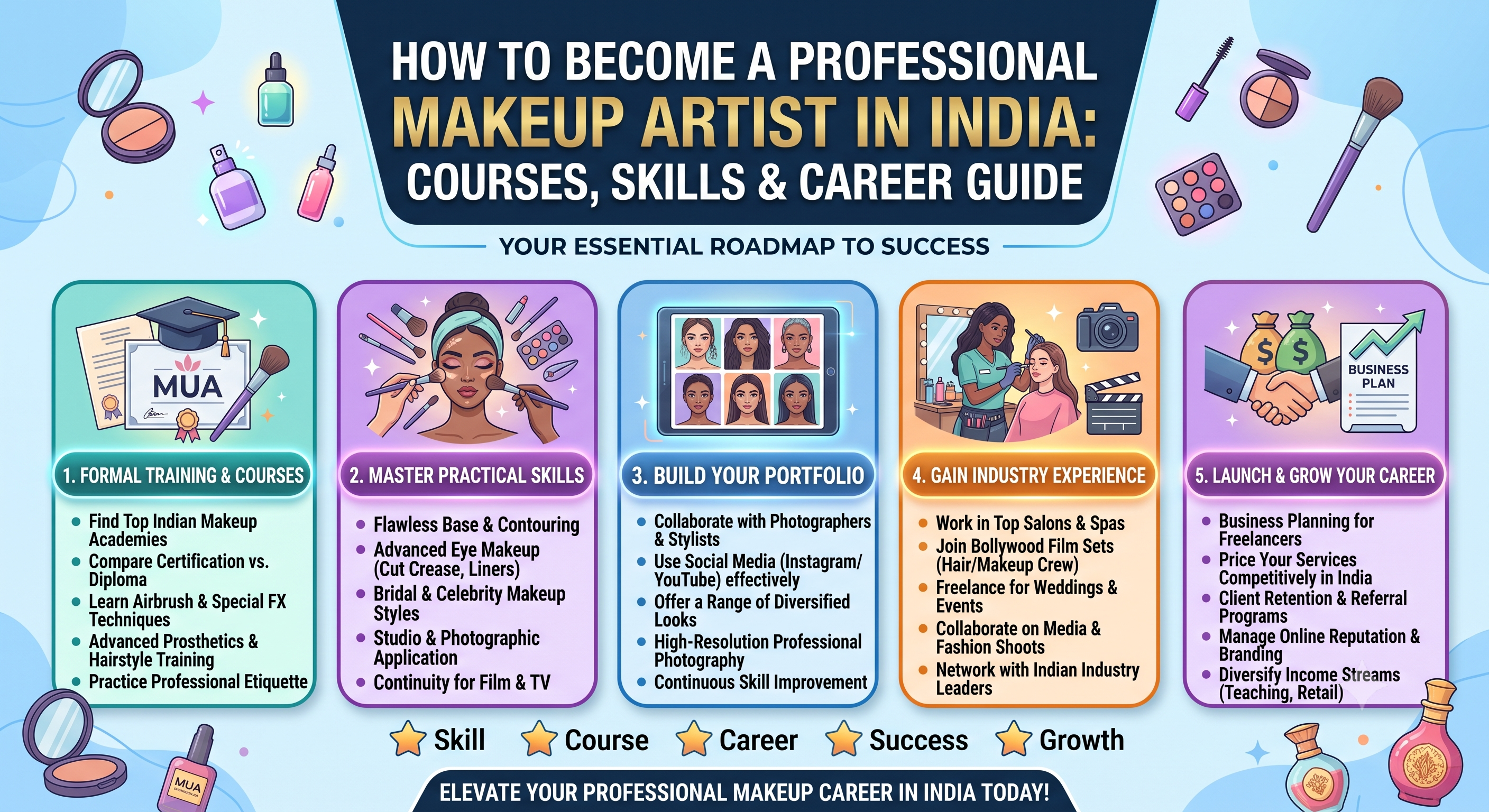
This guide explains how to become a professional makeup artist in India, which courses to consider, essential skills to learn, career opportunities, earning potential, and practical steps for building a successful makeup career.
Can We Become a Makeup Artist After 12th in India?
Yes. Completing Class 12 can be a suitable starting point for a career in makeup artistry. Professional makeup courses are generally skill-oriented and focus heavily on practical learning.
Students from different academic backgrounds can explore makeup as a career. We do not necessarily need to follow a conventional academic degree route to begin developing professional makeup skills.
After 12th, we can choose from courses such as:
- Basic Makeup Course
- Professional Makeup Artist Course
- Advanced Makeup Course
- HD Makeup Course
- Airbrush Makeup Course
- Bridal Makeup Course
- Fashion Makeup Course
- Hair and Makeup Course
- Beauty and Makeup Diploma Programs
The best choice depends on our career goals and the type of makeup services we want to provide.
Step-by-Step Guide to Becoming a Professional Makeup Artist in India
Step 1: Learn the Fundamentals of Makeup
Before moving into advanced techniques, we should understand the basic principles of professional makeup.
These include:
- Skin preparation
- Foundation application
- Concealing
- Colour correction
- Setting
- Blush application
- Contouring
- Highlighting
- Eyebrow grooming
- Eye makeup
- Lip makeup
Strong fundamentals make it easier to create more advanced looks later.
Step 2: Understand Different Skin Types
A professional makeup artist works with different clients every day. Therefore, understanding skin types is essential.
We should learn to recognize basic characteristics associated with:
- Normal skin
- Dry skin
- Oily skin
- Combination skin
- Sensitive skin
Skin preparation should be adapted to the client’s needs. For example, overly matte preparation may not be appropriate for someone with very dry-looking skin, while excessively rich products may not be suitable for every oily skin type.
Professional makeup begins with proper skin preparation, not simply foundation application.
Step 3: Learn Colour Theory
Colour theory is one of the most important technical concepts for makeup artists.
It helps us understand:
- Undertones
- Complementary colours
- Colour correction
- Foundation shades
- Blush shades
- Lip colours
- Eyeshadow combinations
Understanding warm, cool, and neutral undertones can help us make more informed product choices.
Colour correction can also be useful for addressing the appearance of certain areas of discolouration before applying complexion products.
Step 4: Learn Professional Makeup Techniques
Once the fundamentals are established, we can develop advanced application techniques.
Important techniques include:
Base Makeup
- Primer selection
- Foundation matching
- Layering
- Concealing
- Colour correction
- Setting
- Long-wear preparation
Eye Makeup
- Eyeshadow blending
- Eyeliner
- Kajal
- Smokey eyes
- Cut-crease techniques
- Shimmer application
- False eyelashes
Face Makeup
- Contouring
- Highlighting
- Blush placement
- Face-shape balancing
- Natural makeup
- Glam makeup
Lip Makeup
- Lip preparation
- Lip lining
- Colour selection
- Creating clean edges
- Long-lasting lip application
Step 5: Learn Bridal Makeup
Bridal makeup is one of the most popular specializations for makeup artists in India.
Indian bridal makeup often involves detailed coordination between makeup, hairstyle, outfit, jewellery, and overall wedding styling.
A professional bridal makeup course may cover:
- Bridal skin preparation
- Traditional bridal makeup
- Contemporary bridal makeup
- HD bridal makeup
- Long-lasting makeup
- Eye makeup
- Lash application
- Bridal hairstyling
- Hair accessories
- Dupatta setting
- Saree or outfit draping
- Engagement looks
- Reception looks
A bridal artist must also understand how makeup appears under natural light, indoor lighting, photography, and video.
Step 6: Master HD Makeup
HD makeup has become an important skill for professionals working with high-resolution photography and video.
The goal is generally to create a polished complexion that looks refined under detailed cameras without unnecessarily heavy-looking layers.
Training may include:
- Skin preparation
- Thin and controlled product layering
- Shade matching
- Texture management
- Corrector and concealer placement
- Setting techniques
- Camera-conscious application
The quality of skin preparation and blending is particularly important for professional results.
Step 7: Learn Airbrush Makeup
Airbrush makeup is another advanced technique that some professional artists choose to specialize in.
It involves applying makeup using an airbrush system rather than traditional brushes or sponges.
A professional airbrush course may cover:
- Airbrush equipment
- Product compatibility
- Air pressure control
- Foundation application
- Layering
- Cleaning the equipment
- Maintenance
- Troubleshooting
Airbrush makeup requires hands-on practice because controlling the equipment and product flow takes time.
Step 8: Develop Professional Hairstyling Skills
Makeup and hairstyling often go together, particularly for bridal and event work.
A makeup artist who can also provide basic hairstyling can offer a more complete service.
Useful hairstyles include:
- Curls
- Waves
- Braids
- Ponytails
- Buns
- Bridal buns
- Updos
- Volume styling
- Hair-accessory placement
Even if our primary specialization is makeup, learning complementary hairstyling techniques can increase professional versatility.
Step 9: Learn Makeup Hygiene and Safety
Professional makeup artists work directly on clients’ skin, eyes, and lips. Hygiene should therefore be treated as a fundamental professional responsibility.
We should learn how to:
- Clean and sanitize appropriate tools
- Keep brushes clean
- Use disposable applicators where appropriate
- Avoid cross-contamination
- Keep products properly stored
- Avoid sharing products in an unhygienic manner
- Maintain a clean workstation
- Follow manufacturer instructions
- Check product condition and expiry information
Clean tools and hygienic working practices protect both the client and the makeup artist.
Step 10: Build a Professional Makeup Kit
A professional makeup kit should be built gradually rather than purchasing every available product.
A basic professional kit may include:
Complexion Products
- Primer
- Foundation
- Concealer
- Colour correctors
- Setting powder
- Setting products
Face Products
- Blush
- Highlighter
- Contour products
- Bronzer
Eye Products
- Eyeshadow palettes
- Eyeliner
- Kajal
- Mascara
- Eyebrow products
- False lashes
- Lash adhesive
Lip Products
- Lip liners
- Lipsticks
- Lip glosses
- Lip preparation products
Tools
- Makeup brushes
- Sponges
- Eyelash tools
- Sharpeners
- Mixing palettes
- Disposable applicators
The exact kit should depend on our specialization and client requirements.
What Skills Does a Professional Makeup Artist Need?
Technical ability is only one part of professional success.
Technical Makeup Skills
We should develop:
- Skin preparation
- Colour matching
- Foundation application
- Eye makeup
- Contouring
- Highlighting
- Lip makeup
- Bridal makeup
- HD makeup
- Airbrush techniques
Creative Skills
Makeup is a visual art, so creativity is essential.
We should learn how to:
- Adapt trends
- Create customized looks
- Coordinate makeup with outfits
- Work with different face shapes
- Balance colours
- Understand different aesthetics
Communication Skills
A makeup artist needs to listen carefully to clients.
Good communication helps us understand:
- What the client wants
- What they normally wear
- What type of finish they prefer
- How much makeup they are comfortable wearing
- What event they are attending
- Their schedule and expectations
Time Management
Bridal and event bookings often involve strict schedules. A professional artist should be able to estimate service time accurately and maintain an organized workflow.
Types of Makeup Artists in India
After professional training, artists can specialize in different areas.
Bridal Makeup Artist
Works primarily with brides and wedding clients.
Party Makeup Artist
Creates makeup looks for parties, celebrations, festivals, and social events.
Fashion Makeup Artist
Works with models, fashion photographers, designers, and fashion productions.
Editorial Makeup Artist
Creates artistic makeup looks for magazines, campaigns, portfolios, and creative shoots.
Film and Television Makeup Artist
Works on productions requiring makeup continuity, character looks, camera-ready makeup, and specialized techniques.
Beauty Content Creator
Creates makeup tutorials, product demonstrations, reviews, and educational content for digital platforms.
Career Opportunities After a Makeup Artist Course
A professional makeup course can lead to several career paths.
Work in a Beauty Salon
A salon can provide valuable experience, especially for beginners. Working alongside experienced professionals allows us to improve speed, consultation, and client-handling skills.
Work as a Bridal Makeup Artist
Bridal makeup can become a major specialization. Professionals may work at wedding venues, salons, studios, or travel to clients.
Become a Freelance Makeup Artist
Freelancing allows artists to work independently and accept appointments according to their schedules.
Freelancers can build services around:
- Bridal makeup
- Party makeup
- Engagement makeup
- Photoshoots
- Events
- Personal makeup sessions
Start a Makeup Studio
Experienced artists may eventually establish their own makeup studio.
A studio can provide a controlled environment for bridal trials, makeup appointments, portfolio shoots, and beauty services.
Become a Makeup Trainer
Experienced makeup artists can move into education by teaching beginners and aspiring professionals.
How Much Can a Makeup Artist Earn in India?
Makeup artist income varies considerably. Factors include:
- Experience
- Location
- Specialization
- Client base
- Portfolio quality
- Reputation
- Service pricing
- Number of bookings
- Freelance versus salaried work
- Bridal specialization
Beginners may start with entry-level employment while building experience. Experienced artists with strong portfolios and established client networks can command higher service fees.
Bridal makeup, specialized makeup, destination events, fashion work, and premium freelance services may offer different earning structures.
Rather than focusing only on an initial salary, aspiring artists should concentrate on developing skills, portfolio quality, client trust, and specialization.
How to Build a Makeup Artist Portfolio
A professional portfolio is one of the most important marketing tools for a makeup artist.
We should showcase:
- Before-and-after transformations
- Bridal looks
- Natural makeup
- Glam makeup
- Eye makeup
- HD makeup
- Different skin tones
- Different face shapes
- Hairstyling
- Creative looks
High-quality photographs are important because potential clients often judge a makeup artist’s work visually before making an enquiry.
How to Get Makeup Clients in India
Once we have developed our skills and portfolio, we can begin building our client base.
Useful strategies include:
- Creating a professional social media portfolio
- Posting high-quality transformation photos
- Building relationships with photographers
- Networking with wedding professionals
- Offering makeup trials
- Collecting genuine client reviews
- Creating referral programs
- Maintaining professional communication
- Participating in beauty events and workshops
- Building a local online presence
Consistency is important. A professional online portfolio should clearly communicate our specialization, service area, work quality, and booking process.
How to Choose the Best Makeup Artist Course in India
Before enrolling, we should compare academies carefully.
Check the Course Curriculum
A strong curriculum should cover fundamentals and advanced techniques relevant to our goals.
Prioritize Practical Training
Makeup is a hands-on profession. We should have sufficient opportunities to practise on different faces and skin types.
Check Trainer Experience
Experienced instructors can teach technique, product selection, hygiene, troubleshooting, and professional workflow.
Ask About Certification
Understand what type of certificate is awarded and what it represents. Certification can document training, but practical ability and portfolio quality remain important for professional work.
Look at Student Work
Reviewing actual student portfolios can help us understand the quality of training.
Check Advanced Options
If we want to specialize, look for courses covering areas such as HD makeup, airbrush makeup, bridal makeup, hairstyling, and professional beauty techniques.
How Long Does It Take to Become a Professional Makeup Artist?
There is no single duration that applies to every learner.
Short workshops can introduce basic techniques, while comprehensive professional programs may take several weeks or months depending on the syllabus and amount of practical training.
After completing a foundation course, we may need additional practice and specialization before working confidently with paying clients.
Learning makeup is an ongoing process. Trends, products, techniques, and client expectations continue to evolve, so professional artists should continue practising and upgrading their skills.
Common Mistakes Beginner Makeup Artists Should Avoid
Beginners often focus heavily on buying products instead of developing technique.
Common mistakes include:
- Buying too many products too early
- Ignoring skin preparation
- Choosing incorrect foundation shades
- Applying excessive foundation
- Poor blending
- Neglecting hygiene
- Using dirty brushes
- Copying trends without adapting them
- Ignoring client preferences
- Underestimating time requirements
- Failing to photograph work professionally
The best investment for a beginner is often education and practice rather than an unnecessarily large makeup collection.
Frequently Asked Questions
Can I become a professional makeup artist after 12th?
Yes. Students can pursue professional makeup training after Class 12. Practical courses can help beginners develop the technical and creative skills required for makeup artistry.
Which makeup course is best for beginners?
A comprehensive professional makeup course is generally a strong starting point. Beginners can later specialize in bridal, HD, airbrush, fashion, or other makeup categories.
Is a degree necessary to become a makeup artist in India?
A traditional degree is not necessarily required for many makeup artistry careers. Professional training, hands-on experience, portfolio quality, communication, and specialization are highly important.
How can I become a bridal makeup artist?
Start with professional makeup fundamentals, then develop specialized bridal skills such as long-lasting makeup, HD techniques, eye makeup, hairstyling, draping, and client consultation. Building a strong bridal portfolio and gaining practical experience are also important.
Can makeup artists work from home?
Yes. Depending on local requirements and the individual’s setup, makeup artists can operate from a home studio or provide freelance services at client locations.
Is makeup artistry a good career in India?
Makeup artistry can be a rewarding career for people who enjoy beauty, creativity, fashion, and working with clients. Career opportunities exist in salons, bridal services, freelance work, studios, fashion, media, events, and education.
What should I learn besides makeup?
Complementary skills such as hairstyling, skincare, client consultation, beauty hygiene, photography, social media marketing, and basic business management can strengthen a makeup career.
Conclusion
Becoming a professional makeup artist in India can provide a flexible and creative career with opportunities across bridal beauty, salons, freelancing, fashion, events, media, studios, and education.
The journey should begin with strong fundamentals: skin preparation, colour theory, complexion makeup, eye makeup, hygiene, product knowledge, and practical application. From there, aspiring artists can specialize in bridal makeup, HD makeup, airbrush techniques, hairstyling, fashion makeup, or other areas.
A certificate can document our training, but professional growth comes from consistent practice, a strong portfolio, excellent hygiene, client communication, creativity, and continuous learning.
With the right training and dedication, makeup artistry can develop from a personal interest into a professional skill—and eventually into a successful freelance career, studio, or beauty business.