Makeup Artist Course After 12th: Eligibility, Skills, Training & Career Opportunities
Makeup Artist Course After 12th: Eligibility, Skills, Training & Career Opportunities
Choosing the right career after Class 12 can be challenging, especially for students who want a creative profession that offers practical skills and multiple career opportunities. If we have an interest in beauty, fashion, creativity, hairstyling, and personal transformation, a makeup artist course after 12th can be an excellent option to explore.
The beauty industry has expanded beyond traditional salon services. Professional makeup artists now work in bridal beauty, fashion, photography, events, television, film, social media, beauty studios, freelancing, and education.
A structured makeup artist course can help beginners develop the technical skills, product knowledge, hygiene practices, and practical experience needed to work professionally.
This complete guide explains makeup artist course eligibility after 12th, course options, skills to learn, practical training, career opportunities, earning potential, and how to start a professional makeup career.
Can We Join a Makeup Artist Course After 12th?
Yes. Students can generally pursue makeup artist training after completing Class 12. Beauty and makeup education is largely skill-oriented, meaning practical ability and specialized training are central to the profession.
Students from different academic streams can explore makeup artistry. Whether we have studied arts, commerce, science, or another stream, we can develop professional makeup skills through suitable training.
Depending on the academy, we may find:
- Basic Makeup Course
- Professional Makeup Artist Course
- Advanced Makeup Course
- Bridal Makeup Course
- HD Makeup Course
- Airbrush Makeup Course
- Fashion Makeup Course
- Hair and Makeup Course
- Beauty and Makeup Diploma Programs
The best option depends on whether our goal is personal makeup, salon employment, bridal artistry, freelancing, fashion, or entrepreneurship.
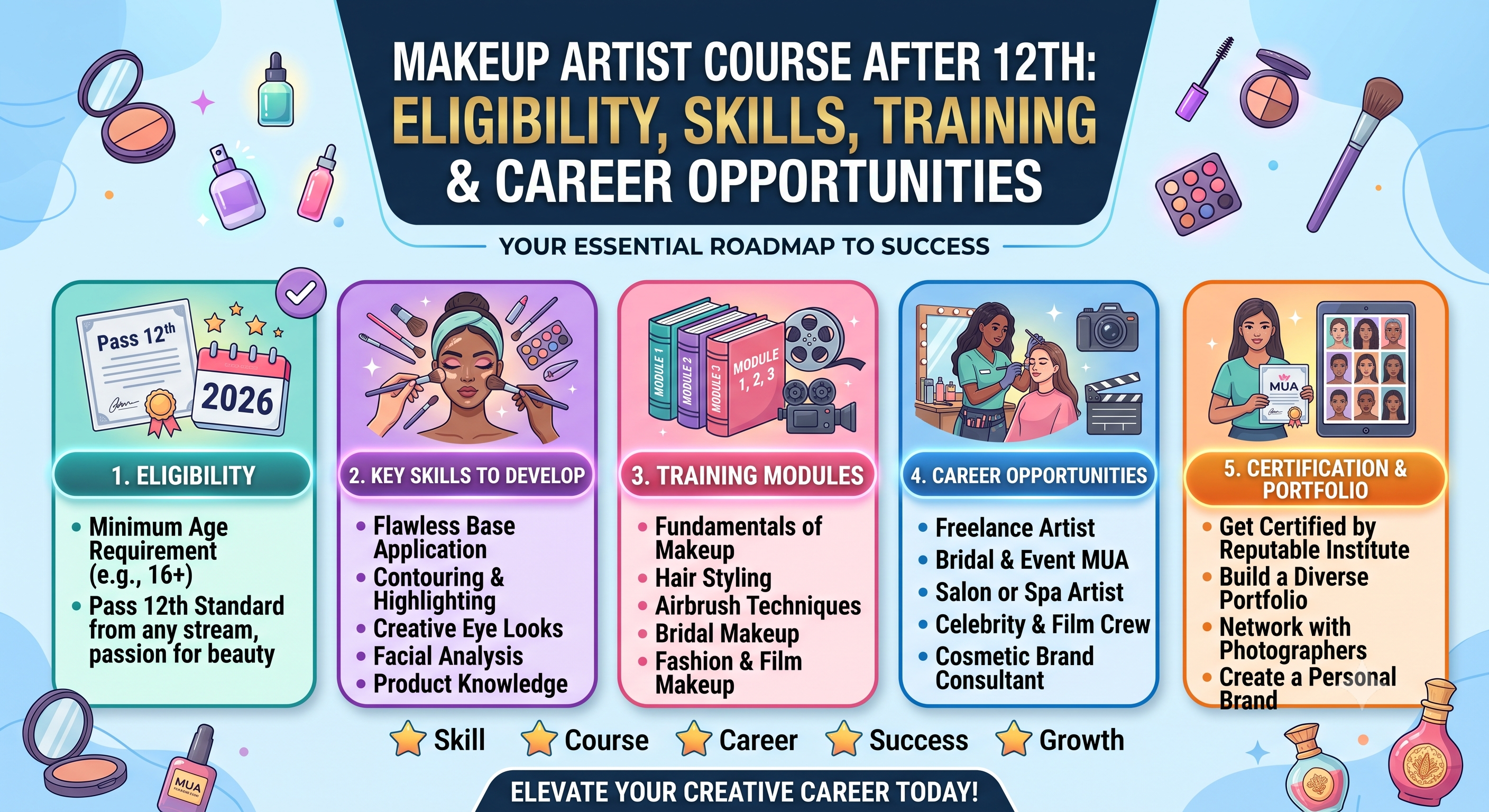
Makeup Artist Course After 12th: Eligibility
Basic Eligibility
For many makeup courses, the basic eligibility requirement is:
- Completion of Class 12 or equivalent
- Interest in beauty and makeup
- Willingness to learn practical techniques
- Regular participation in training and practice
Specific eligibility requirements can vary between academies and individual programs, so students should verify the admission criteria before enrolling.
Is Any Specific Stream Required?
Usually, makeup artistry does not require a specific Class 12 stream.
Students from:
- Science
- Commerce
- Arts
- Humanities
- Vocational backgrounds
can explore professional makeup training.
What matters most is an interest in learning, creativity, attention to detail, and willingness to develop practical skills.
What Do We Learn in a Makeup Artist Course After 12th?
A professional makeup course should provide a structured combination of theory, demonstrations, and hands-on practice.
The syllabus may include the following areas.
1. Makeup Fundamentals
Beginners first learn the basic principles of professional makeup.
This can include:
- Skin preparation
- Primer application
- Foundation
- Concealer
- Colour correction
- Setting techniques
- Blush
- Contouring
- Highlighting
- Lip makeup
These fundamentals create the foundation for advanced makeup artistry.
2. Skin Preparation
Professional makeup begins before foundation is applied.
Students learn how to prepare different skin types for makeup and understand the importance of:
- Cleansing
- Hydration
- Moisturizing
- Appropriate skin preparation products
- Primer selection
- Managing surface texture
Understanding skin preparation helps makeup sit more comfortably and look more polished.
3. Foundation and Shade Matching
Foundation matching is one of the most important skills for a professional makeup artist.
Training may cover:
- Skin tone
- Undertones
- Foundation textures
- Shade selection
- Mixing shades
- Layering
- Coverage control
- Colour correction
We should learn to select products based on the individual client rather than assuming one foundation shade will work for everyone.
4. Colour Theory for Makeup Artists
Colour theory helps makeup artists make better decisions about complexion correction, eyeshadow, blush, and lip colours.
Students may learn:
- Warm undertones
- Cool undertones
- Neutral undertones
- Complementary colours
- Colour correction
- Colour combinations
- Makeup colour balancing
A strong understanding of colour can significantly improve professional makeup results.
5. Eye Makeup Techniques
Eye makeup is one of the most creative areas of professional makeup.
A course may cover:
- Eyeshadow application
- Blending
- Eyeliner
- Kajal
- Smokey eyes
- Shimmer application
- Cut-crease techniques
- Eyebrow definition
- Mascara
- False eyelashes
Students should practise on different eye shapes because the same technique may need to be adapted for different clients.
6. Contouring and Highlighting
Contouring and highlighting can help create visual balance and dimension.
Training can include:
- Face-shape analysis
- Contour placement
- Highlight placement
- Blending
- Cream and powder techniques
- Natural versus glam contouring
The goal is to create a balanced appearance rather than applying the same contour pattern to every face.
7. Professional Bridal Makeup
Bridal makeup is one of the most popular specializations available after professional makeup training.
Indian bridal makeup can involve detailed coordination between makeup, hairstyle, outfit, jewellery, and accessories.
Bridal training may cover:
- Bridal skin preparation
- Traditional bridal looks
- Contemporary bridal looks
- HD bridal makeup
- Long-lasting makeup techniques
- Bridal eye makeup
- False lashes
- Hairstyling
- Hair accessories
- Dupatta setting
- Engagement makeup
- Reception makeup
Students should also learn how makeup appears under different lighting conditions and photography.
8. HD Makeup Training
HD makeup is designed with high-resolution photography and video environments in mind.
Students may learn how to create a refined complexion using controlled product application and careful blending.
Important areas include:
- Skin preparation
- Thin product layering
- Foundation matching
- Concealing
- Texture management
- Setting
- Camera-conscious application
The technique requires practice because excessive product can become more noticeable under high-resolution cameras.
9. Airbrush Makeup
Airbrush makeup is an advanced technique that uses specialized equipment to apply makeup.
Training may include:
- Airbrush equipment
- Product selection
- Air pressure control
- Foundation application
- Layering
- Cleaning
- Equipment maintenance
Hands-on practice is particularly important because controlling an airbrush requires coordination and experience.
10. Hairstyling Skills
Many professional makeup artists also provide hairstyling, particularly for bridal and event clients.
A comprehensive course may introduce:
- Basic blow-drying
- Curls
- Waves
- Braids
- Ponytails
- Buns
- Updos
- Bridal hairstyles
- Hair-accessory placement
Combining makeup and hairstyling can allow professionals to provide a more complete beauty service.
Essential Skills for a Professional Makeup Artist
Completing a course is only the beginning. Successful artists need a combination of technical and professional skills.
Technical Skills
We should develop expertise in:
- Skin preparation
- Foundation matching
- Concealing
- Colour correction
- Eye makeup
- Contouring
- Highlighting
- Lip makeup
- Bridal makeup
- HD makeup
- Airbrush makeup
- Basic hairstyling
Creative Skills
Makeup is a creative profession. Artists should learn to:
- Adapt current trends
- Create customized looks
- Work with different face shapes
- Coordinate colours
- Match makeup with outfits
- Understand different aesthetics
Communication Skills
A makeup artist must understand what the client actually wants.
Good communication includes:
- Listening carefully
- Asking relevant questions
- Explaining available options
- Managing expectations
- Discussing timing
- Giving aftercare advice
Time Management
Professional makeup appointments often operate under strict schedules. Bridal artists, in particular, may need to complete several services before a ceremony.
Efficient organization and time management therefore become important professional skills.
Why Practical Training Matters in a Makeup Course
Makeup is a hands-on profession. Reading about makeup techniques is not enough to become proficient.
During practical training, students can develop:
- Brush control
- Blending ability
- Product control
- Speed
- Precision
- Colour matching
- Client handling
- Confidence
We should ideally practise on people with different skin tones, face shapes, eye shapes, and skin characteristics.
Regular practical practice is one of the most important steps in becoming a confident makeup artist.
Makeup Hygiene and Professional Safety
Professional makeup artists work directly with clients, so hygiene should be a fundamental part of training.
Students should learn:
- Brush cleaning
- Appropriate sanitization
- Disposable applicator use
- Cross-contamination prevention
- Product storage
- Workstation hygiene
- Safe eye-product practices
- Product expiry awareness
We should never compromise hygiene simply to save time during an appointment.
How to Choose the Best Makeup Artist Course After 12th
Before enrolling, students should compare academies carefully.
Check the Curriculum
Look for a course that includes the skills relevant to your career goal.
Prioritize Practical Classes
Ask how much time is dedicated to hands-on training.
Evaluate the Trainers
Experienced instructors can provide practical guidance that is difficult to learn from theory alone.
Check Student Work
Look at actual student makeup results and portfolios rather than relying only on promotional photographs.
Understand Certification
Ask what certificate is provided and what the course includes.
Check Advanced Specializations
If you plan to specialize in bridal makeup, look for training in HD, airbrush, hairstyling, bridal looks, and advanced eye makeup.
Career Opportunities After a Makeup Artist Course
A professional makeup course can lead to several career options.
1. Professional Makeup Artist
We can work with clients for different occasions and provide customized makeup services.
2. Bridal Makeup Artist
Bridal makeup can become a dedicated specialization with services for brides, bridesmaids, engagements, receptions, and wedding events.
3. Freelance Makeup Artist
Freelancing allows artists to work independently and travel to clients or event locations.
4. Salon Makeup Artist
Salons offer an opportunity to gain practical experience while working with a variety of clients.
5. Fashion Makeup Artist
Fashion artists can work with models, photographers, designers, and creative productions.
6. Film and Television Makeup Artist
With additional specialized training and industry experience, artists can explore film, television, advertising, and production work.
7. Beauty Content Creator
Makeup artists can create educational tutorials, beauty demonstrations, product content, and professional makeup videos.
8. Makeup Trainer
Experienced professionals can eventually teach makeup to beginners and aspiring artists.
9. Makeup Studio Owner
With sufficient experience and business knowledge, a makeup artist can establish an independent studio.
Makeup Artist Salary and Earning Potential in India
Income varies depending on several factors, including:
- Experience
- Location
- Specialization
- Portfolio quality
- Client base
- Reputation
- Number of bookings
- Type of employment
- Freelance pricing
Beginners may start with entry-level salon employment while building technical experience.
With specialization and a strong reputation, professionals can increase their service fees. Bridal makeup, premium event makeup, destination work, and specialized makeup services can have different pricing structures from regular salon employment.
For freelancers and studio owners, income also depends on operating costs, bookings, marketing, and client retention.
How to Build a Makeup Artist Portfolio After Training
A portfolio demonstrates our practical ability to potential clients.
A strong portfolio can include:
- Bridal makeup
- Natural makeup
- Party makeup
- Glam makeup
- HD makeup
- Eye makeup
- Different skin tones
- Different face shapes
- Hairstyling
- Before-and-after transformations
High-quality photography is important because makeup is a visual profession.
Students can begin building a portfolio during supervised practice, with appropriate permission from models or clients.
How to Get Your First Makeup Clients
After training, beginners can start building their client base through:
- Social media
- Referrals
- Local networking
- Photography collaborations
- Wedding professionals
- Bridal trials
- Portfolio shoots
- Genuine client reviews
- Local business listings
- Beauty events
Professional communication is important from the first enquiry through the final appointment.
Can We Start a Makeup Career Without Experience?
Every professional starts somewhere. However, beginners should not rush into complex paid assignments before developing sufficient practical ability.
A better progression is:
Learn → Practise → Build a Portfolio → Assist Experienced Artists → Take Smaller Assignments → Develop Specialization → Build a Client Base
Working as an assistant can be particularly valuable because it provides exposure to professional workflows, client management, time pressure, and real event environments.
How Long Does a Makeup Artist Course Take After 12th?
Course duration varies according to the academy, syllabus, and level of specialization.
A short-term course may provide basic knowledge, while a comprehensive professional program may require several weeks or months of training.
Advanced areas such as bridal makeup, HD makeup, airbrush techniques, and hairstyling may require additional training.
The ideal course should provide sufficient practical training rather than focusing only on completing the syllabus quickly.
Common Mistakes Beginners Should Avoid
New makeup artists often make mistakes while developing their skills.
Common mistakes include:
- Buying too many products
- Ignoring skin preparation
- Using the wrong foundation shade
- Applying excessive product
- Poor blending
- Neglecting hygiene
- Using dirty brushes
- Copying online trends without adaptation
- Ignoring client preferences
- Underestimating appointment time
- Not photographing work professionally
The priority should always be skill development, practice, hygiene, and client satisfaction.
Frequently Asked Questions
Can I do a makeup artist course after 12th?
Yes. Students who have completed Class 12 can explore professional makeup courses, subject to the individual academy’s admission requirements.
What is the eligibility for a makeup artist course after 12th?
Many beginner and professional makeup courses accept students who have completed Class 12 or an equivalent qualification. Specific requirements vary by institute.
Which makeup course is best after 12th?
A comprehensive professional makeup course can be a strong starting point for beginners. Those interested in bridal work can later specialize in bridal, HD, airbrush, and hairstyling techniques.
Do I need a degree to become a makeup artist?
A traditional degree is not necessarily required for many makeup artistry careers. Practical skills, professional training, experience, portfolio quality, and client-handling ability are highly important.
Can I become a bridal makeup artist after completing a makeup course?
Yes. A professional foundation followed by specialized bridal training can prepare aspiring artists to develop bridal makeup skills.
Can I start freelancing after a makeup course?
Yes, but beginners should first ensure they have sufficient practical experience and confidence. Building a portfolio and starting with manageable assignments can help develop professional experience.
What should I learn besides makeup?
Complementary skills such as hairstyling, skincare, colour theory, hygiene, photography, client consultation, social media marketing, and basic business management can make a makeup career more versatile.
Conclusion
A Makeup Artist Course After 12th can be an excellent pathway for students who want to turn their interest in beauty and creativity into a professional career.
The journey begins with the fundamentals—skin preparation, colour theory, foundation matching, eye makeup, contouring, highlighting, lip makeup, hygiene, and product knowledge. With advanced training, students can progress into bridal makeup, HD makeup, airbrush makeup, hairstyling, fashion makeup, or other specialized areas.
However, professional success does not come from a certificate alone. It comes from hands-on practice, creativity, communication, hygiene, portfolio development, client satisfaction, and continuous learning.
For students completing Class 12, the beauty industry offers multiple routes: salon employment, freelance makeup artistry, bridal services, beauty studios, content creation, training, and eventually entrepreneurship. With structured training and consistent practice, makeup artistry can become a rewarding and flexible career in India’s growing beauty and wellness industry.